I’ve just taken a long walk through the city. Now I’m sitting in a cafe with coffee and baklava pretentiously reading L’Etranger. But in fact I don’t feel pretentious; rather I feel a little as if I’m finding more of myself. I’ve come to Camus a little late in life but he seems to be making concrete something half-known. The Outsider epitomises the way I feel about life, the world and my place in it. I said the other day I felt disconnected… I don’t think it’s the travelling but my usual state of being. Listening to the children drumming on tin cans and begging on the bridge; watching tourists treat them as a photographic opportunity gave me a profound sense of helplessness in the face of a universe so unaware of us. Towards the end of the book Camus writes: “je m’ouvrai pour la premier fois la tendre indifference du monde.” Today I think I really felt that revelation instead of just knowing it. And the sun beats down as I sit amidst conversations in many languages I don’t understand realising how often I don’t understand what happens around me.
Skopje
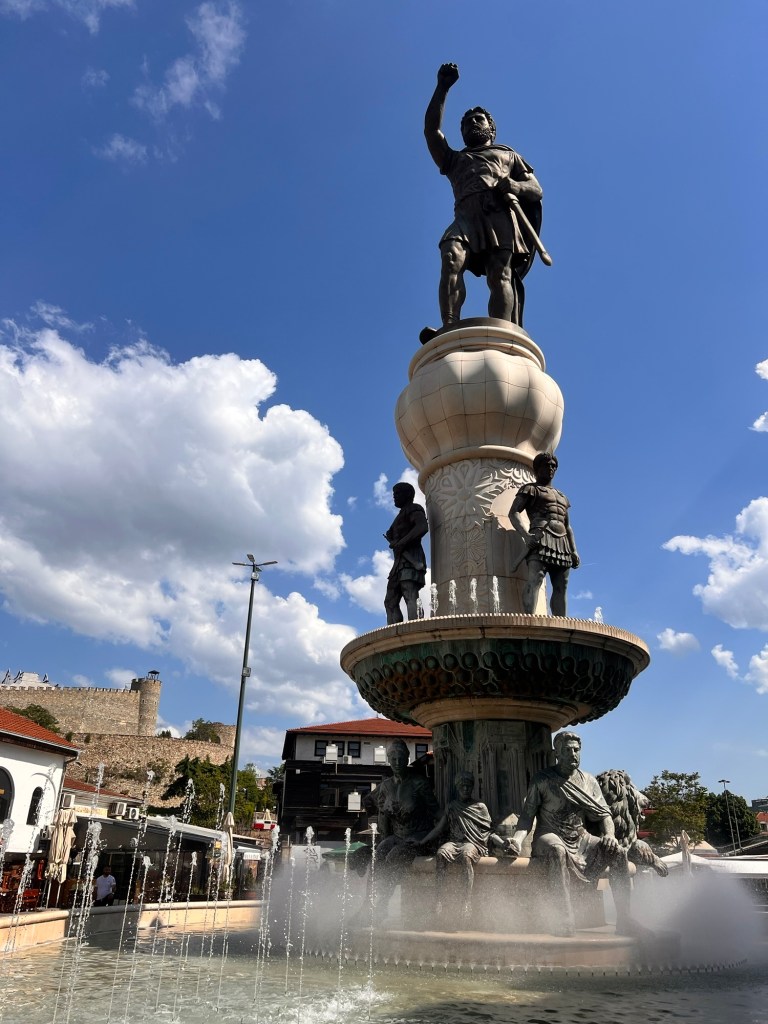
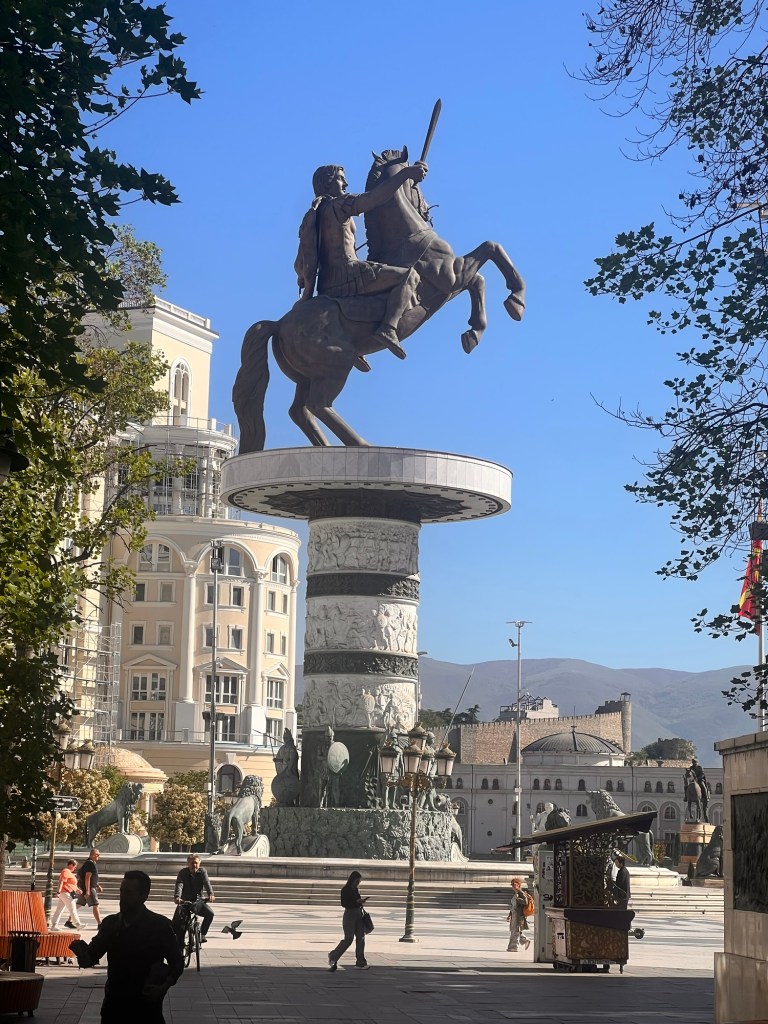
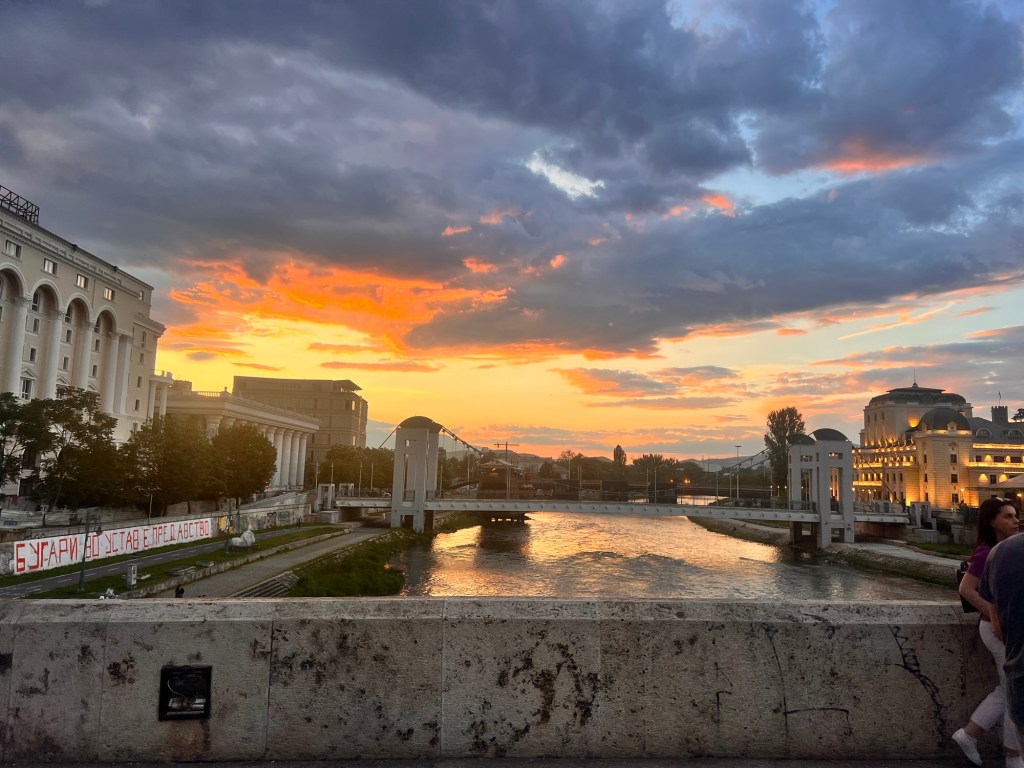
Devastated by the 1963 earthquake Skopje is a city trying find it’s place in a modern world and establish itself as a capital while still maintaining a pride in it’s history. A city of grand projects, new civic buildings and reconstructed historical sites. It is also a city of mammoth statues. It maybe not always in my taste; much is in a bastardised neo classical genre, but it is nonetheless imposing.
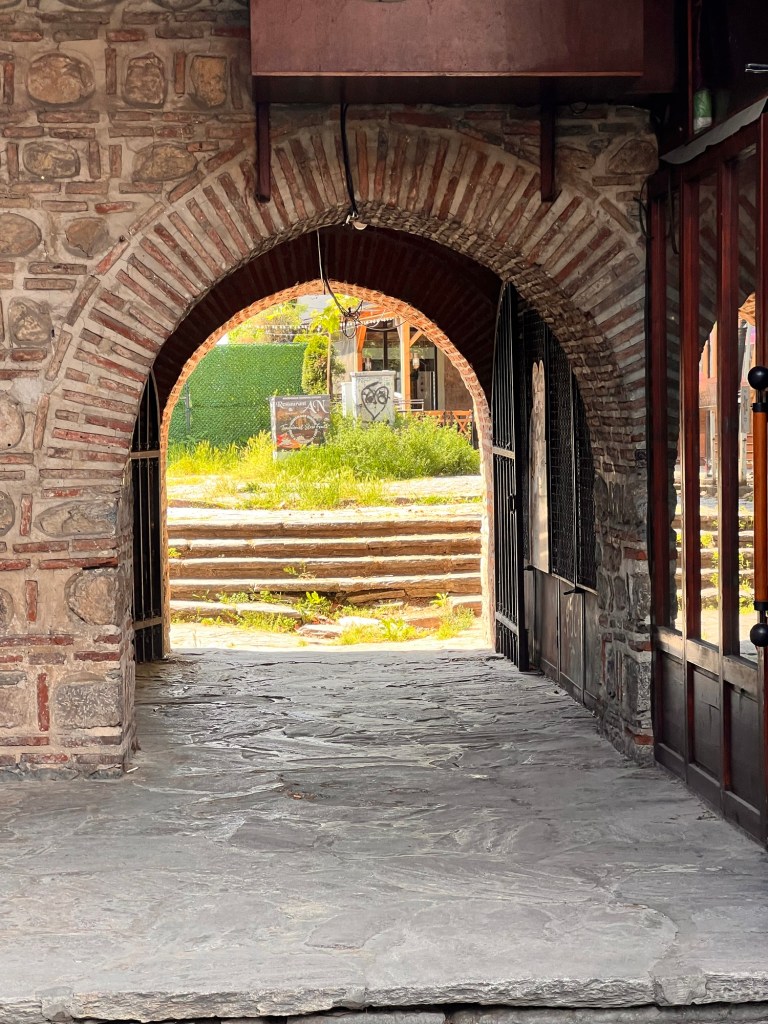
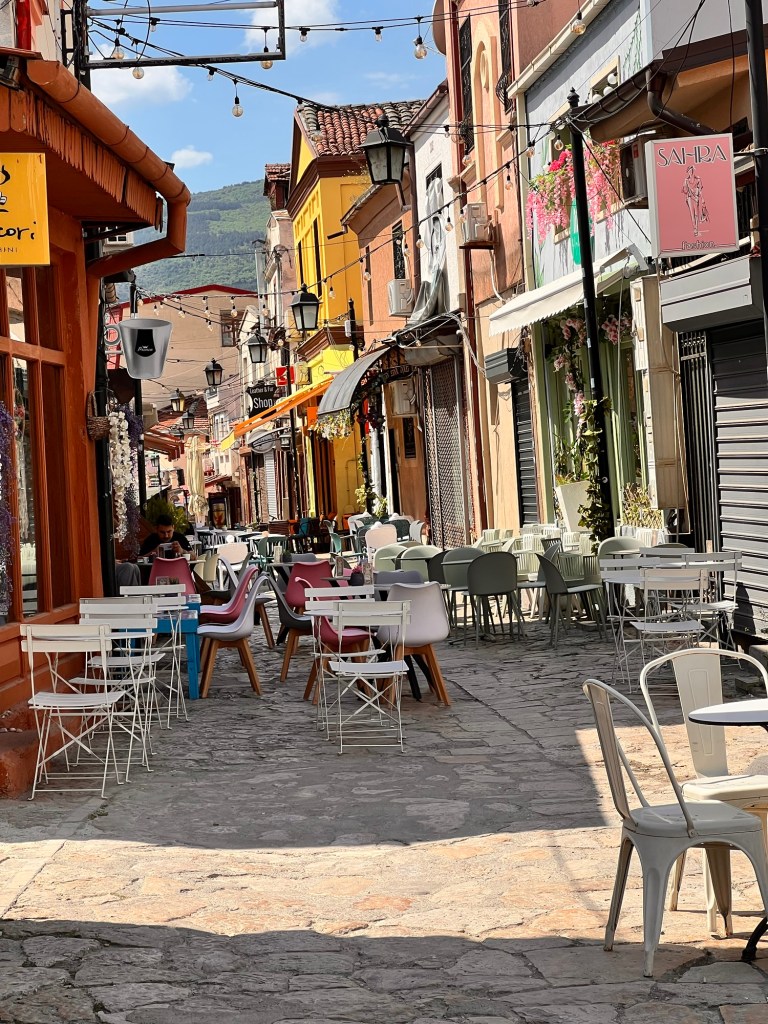
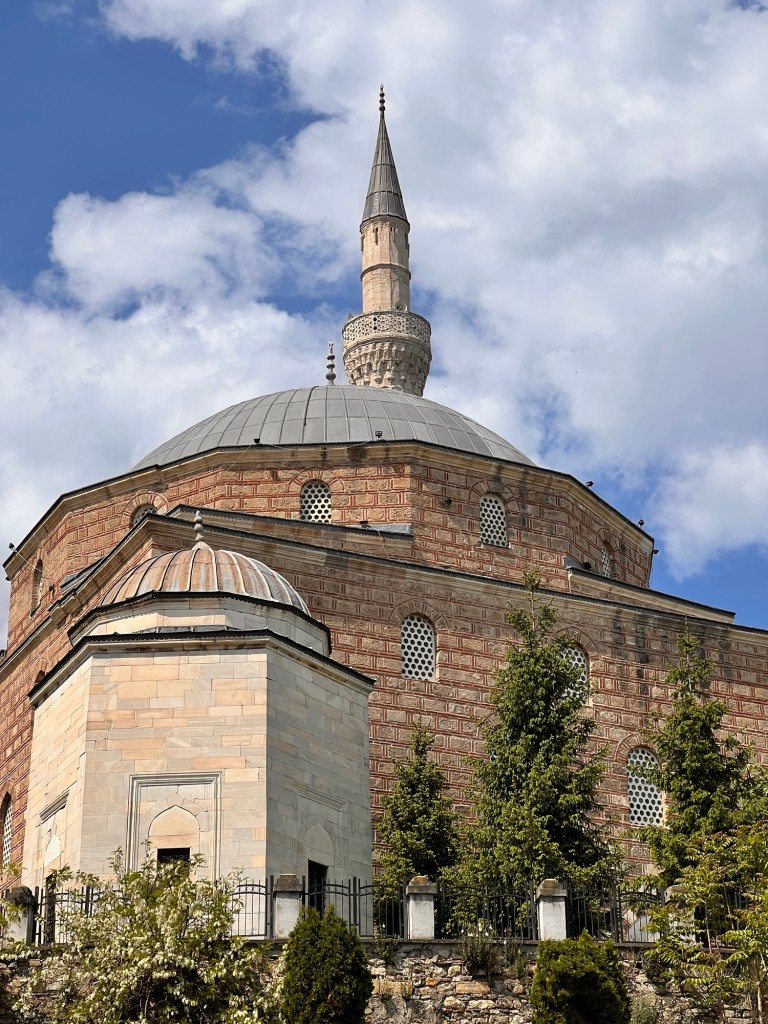
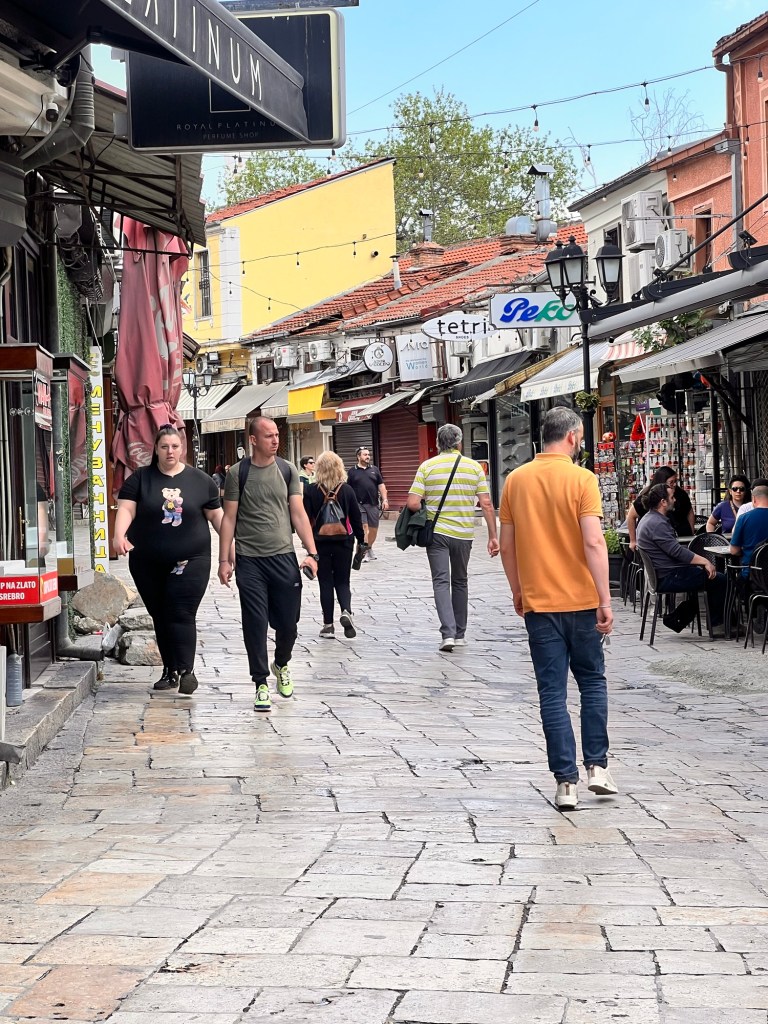
The Turkish Bazaar is still a pattern of old streets with some older buildings: mosques, bath houses and a church situated below the fortress, a bastion since the Byzantine emperor Justinian’s era and subsequently developed by the Ottomans. It is hard to think that the country was under Ottoman rule until 1912.

 Escape to myself
Leave a comment